
About Us
Vivekananda Ashrama
Vivekananda Ashram, Shyamlatal, was established in the year 1915 in the Himalayan region. Since its inception, the Ashram has been engaged in various forms of humanitarian service including running a charitable dispensary, imparting moral education, and undertaking relief work for the distressed.
Over time, the scope and scale of the Ashram’s activities have grown manifold. Today, it continues to serve the underprivileged communities of this remote Himalayan area through a wide range of initiatives. These include value-based education, informal teaching, and free computer coaching classes aimed at equipping local youth with essential digital literacy skills.
In the field of health care, the Ashram operates the Vivekananda Charitable Dispensary, which has emerged as the only medical center in the region providing both curative and preventive health care services entirely free of cost. It serves people living in a radius of 50–55 kilometers, offering expert consultation from qualified allopathic doctors. The Ashram also organizes specialized medical camps and provides free medical van services to transport patients from remote villages to the dispensary and back.
A special initiative, the GAP Tuition Programme, has been launched to support underprivileged children from Class 1 to Class 10. This programme offers academic guidance and supplementary education to bridge learning gaps and strengthen their academic foundation. Classes are conducted free of charge by qualified volunteers and teachers, ensuring educational support for those who need it most.
In addition to its educational and medical services, the Ashram also serves as a center for spiritual growth and reflection. From time to time, spiritual retreats are conducted to provide seekers with exposure to Vedanta, Advaita philosophy, and the scriptures, helping them discover the truth within the self. These retreats emphasize the practical application of Vedanta in daily life, encouraging participants to live spiritually with awareness, selflessness, and inner strength. Monks of the Ramakrishna Order guide these sessions through discourses, offering insights that inspire inner transformation.
The Ashram also offers guest accommodation for devotees, allowing them to stay for 2 to 7 days in a peaceful, serene setting. During their stay, visitors can participate in the Ashram’s spiritual routines and immerse themselves in the tranquil atmosphere, gaining a deeper spiritual and divine experience.
Guided by the motto “Shiva Jnane Jiva Seva” — “to serve the living being as God” — the Ashram remains committed to uplifting the lives of the rural poor through dedicated service, education, health care, and spiritual awakening.
The Journey of Swami Virajanandaji Maharaj and the Founding of Vivekananda Ashrama
Vivekananda Ashrama is the brainchild of Swami Virajanandaji Maharaj. He had a strong desire to live a life of deep meditation. So he established this ashrama in Shyamlatal as a center for spiritual practice and service to humanity. Swami Virajanandaji Maharaj’s teachings continue to inspire seekers on the spiritual path today. He joined the Baranagar Monastery in 1891 and received mantra initiation from the Holy Mother in 1893. In 1897, Swami Vivekananda gave him the title of sannyasi, making him one of his first four disciples. In 1899, he went to Mayavati Advaita Ashrama to assist Swami Swarupananda with the monthly magazine, Prabudhha Bharata. After Swami Swarupananda passed away in 1906, Swami Virajananda became the president of Mayavati Ashrama.
From 1906 to 1914, he worked hard to publish the complete works of Swami Vivekananda and partly wrote his life story. This exhausting work made him yearn for a more peaceful, contemplative life. Although senior monks advised him against it, he decided to move to a quiet place called Jole, near the village of Shyanla.
Mother Sevier, a disciple of Swami Vivekananda, cared deeply for Swami Virajananda and wanted to check on him. When she visited his small hut in Jole, she noticed that the water source was far away, making it difficult for him to fetch water daily. The village chief, Mr. Harsing, then came up to Swami Virajananda and said there was a water source nearby and offered to sell his old house for a modest price.
Mother Sevier and Swami Virajananda went to see Shyanla and were enchanted. The house was at the foot of a mountain, with a lovely lake 300 feet below. On one side, they could see snow-covered peaks, and on the other, a dense forest valley. The River Kali flowed below, and beyond it lay vast plains stretching to the horizon. The peaceful beauty of the area inspired a contemplative mood, making everyone agree that it was a perfect place for meditation. They decided to buy the house and land for Rs. 700, finalizing the deal on November 8, 1914, in Champawat.
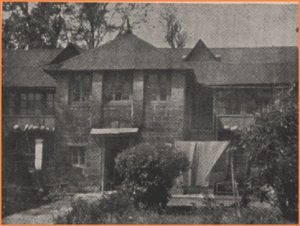
The rustic stone house of Mr. Harsing was in very bad condition, and there was no chance for renovation. With financial support and encouragement from Mother Sevier, Swami Virajananda decided to rebuild it. The whole project would cost at least 1,000 rupees, and construction began on November 10, 1914.
Rebuilding and Dedication of Vivekananda Ashrama
Brahmacha Sitaraman, a devoted disciple from Mayawati Ashrama, came to help Swami Virajananda with construction, household tasks, gardening, and editing Swamiji’s biography. During the construction, Swami Virajananda had a steel bag stolen, which contained 300 rupees. Once again, Mother Sevier stepped in to provide the needed funds.
At the end of 1914, Swami Virajananda had completed editing the third volume of Swamiji’s biography. On the last day of the year, he wrote in his journal: “Goodbye, old year. I have gained much experience, received many favors, finished editing Swamiji’s life (Volume III), and built my ashrama at Shyamlatal. The year has kept me busy. I have done my best and have no regrets. I hope the new year brings the completion of Swami Vivekananda’s life (Volume IV), the finishing touches on my Ashrama, the completion of my responsibilities in Mayawati, and the start of a new life of peaceful meditation in search of the Highest. May the Paramatman help me now and always. Hari Om Tat Sat.”
While the construction continued, Swami Virajananda celebrated the birthdays of Swami Vivekananda and Sri Ramakrishna. He held a feast for the masons, laborers, and villagers, finding joy in serving God through serving others.
By late spring of 1915, the construction was complete. Mother Sevier promised Swami Virajananda that she would visit Shyamlatal for a few months before returning to the West. Her visit was approaching.
May 21, 1915, an auspicious day, was chosen for the dedication of the completed building. On that memorable morning, Mother Sevier arrived at Shyamlatal. After nightfall, a special worship ceremony, including a sacred Homa, took place from 10 p.m. until midnight on the floor of the building.
Following the holy services, Mother Sevier named the structure ‘Vivekananda Ashrama.’ After midnight, everyone received Prasad, and the house was also called Sevier Dham. Swami Virajananda also renamed the village Shyanla. It is now known as Shyamla Tal –Green Lake.
All activities at the Ashrama are carried out in a spirit of worship. Swami Vivekananda expressed this beautifully: “This is the gist of all worship: to be pure and to do good to others. He who sees Shiva (God) in the poor, the weak, and the sick truly worships Shiva.” The motto and aim of the Ashrama match those of the Ramakrishna Math. After the consecration ceremony, Mother Sevier stayed for a few months in the peaceful atmosphere of the Ashrama. Swami Virajananda often accompanied her to visit the small villages near the lake below the Ashrama. Mother Sevier felt delighted by the simple and honest behavior of the villagers.
Growth and Development of Vivekananda Ashrama
Swami Virajananda and Mother Sevier often gave money to the children in the nearby villages. During this time, they visited the famous holy shrine of the Divine Mother at Purna Giri. When Mother Sevier planned to return to England, she visited Belur Math with Swami Virajananda and then traveled to Bombay to begin her journey in April 1916. In 1930, at the age of 83, she passed away and found peace with the divine.
After establishing Mayawati Ashrama, Mother Sevier constantly supported Swami Virajananda in developing the Shyamlatal Ashrama. Likely, the Ashrama would not have come into existence without her encouragement and help. Swami Premananda paid tribute to her and other Western disciples of Swamiji in a letter to Swami Virajananda, calling her an example of great selflessness. He remembered others like Goodwin and Nivedita, who also showed remarkable dedication. He wrote, “The day I perform worship in the shrine, I offer flowers in their memory… I am a humble servant of these disciples of Swamiji.”
In the first half of 1917, Brahmachari Naren, later known as Swami Mahananda, joined the Ashrama at Shyamlatal. He was blessed by the Holy Mother and served Virajanandaji Maharaj devotedly for 14 years. Maharaj often praised Naren for his hard work. Naren passed away in the Ashrama in 1931.
In 1918, Swami Virajananda completed the fourth volume of Swamiji’s biography. After finishing this important project, he decided to take a pilgrimage to South India. He left the Ashrama in October 1918, trusting Naren to manage things in his absence.
Swami Virajananda traveled extensively, visiting many holy temples and places important to the Ramakrishna Mission. He returned to Shyamlatal on March 21, 1919, only to find that all the helpers had left, leaving Naren alone in the Ashrama. Naren continued to work hard but eventually became exhausted and asked for a break, which Virajananda happily granted. While Naren was away, Virajananda managed all the household chores, cared for the garden, and welcomed guests passing through Shyamlatal. He took great joy in preparing special meals and serving them personally.
Virajananda balanced household work and spiritual practice until November 1921 when he went to Belur Math for a trustees meeting. Important issues were discussed during this time. After celebrating Sri Ramakrishna’s birthday, he returned to Shyamlatal in 1922. At that time, only Virajananda and two Brahmacharins lived at the Ashrama. He immersed himself in intense spiritual practices while also participating in Ashrama activities.
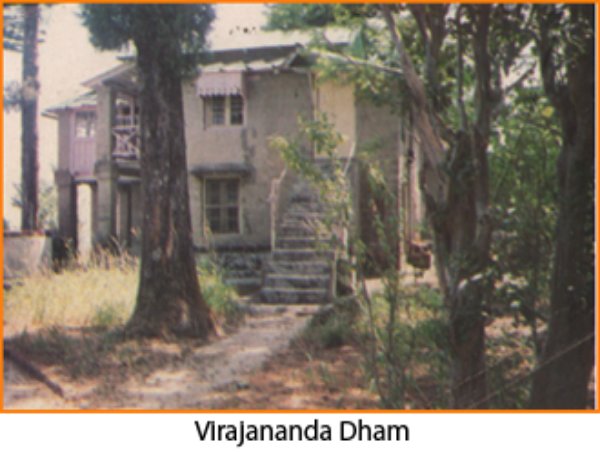
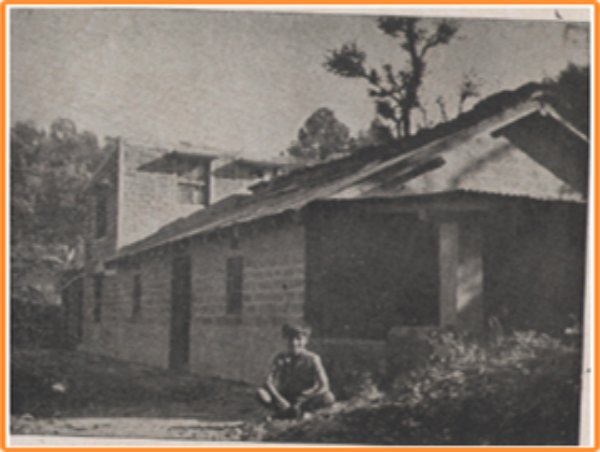
Nearby, a bungalow was owned by Mr. Broke, who wanted to sell it along with some land for a low price. This quiet building, a short distance from the main Ashrama, was perfect for meditation. Seizing the opportunity, Virajananda quickly purchased it for 1,300 rupees. The bungalow had one large central room and two small rooms on either side. After moving in, Virajananda spent a lot of time meditating in the central room.
In 1940, an upper floor was added to the bungalow, and from then on, Virajananda stayed there alone whenever he visited Shyamlatal.
Initial Difficulties and Struggles
From his early days in Shyamlatal, people from nearby villages sought healing from Swami Virajananda. Despite his frequent protests that he knew nothing about medicine, they refused to believe him. To help them, he used local herbs and remedies. This led to the gradual development of a dispensary and hospital.
The medical situation for these hill people in 1928 was very concerning. There were no medical facilities within a 90-kilometer area between Champawat and Tanakpur, leaving many in desperate need. Although Virajananda wanted to live a life focused on deep meditation, he couldn’t ignore the suffering around him. So, from the beginning of the Ashrama in 1915, he started providing medical help in a humble way under the name Ramakrishna Sevashrama.
People had great faith in the medicines given by a Sadhu. Patients traveled long distances, often taking a full day to reach the Ashrama. Some would be carried on shoulders in a Dooli, and many, unaccustomed to medication, recovered quickly from serious illnesses. The Ashrama’s location near the trade route between Tibet and the plains meant that many Bhutias and others, who fell ill in the forests, came for help. The Ashrama not only provided medicine but also offered meals to those in need.
Remarkably, Virajananda managed to have a qualified doctor during that time. Eventually, a monk trained in medicine was assigned to supervise the medical activities.


Expansion of Medical Services
As time passed, the number of patients seeking help at the Ashrama increased. It became clear that a separate building for the dispensary and hospital was necessary. To meet this need, Swami Virajananda purchased 6 cottages of land with an old house across from the main Ashrama. Plans were made to build a two-story building, which would include separate rooms for male and female patients, an examination room, and an operation room on the ground floor. The first floor would house the dispensary with a verandah.
The estimated cost for this new building was Rs. 2,800. In 1930, a spacious and well-ventilated two-story house was completed. From November 1914 to 1928, a total of 9,026 patients received treatment over 14 years, according to the fourteenth annual report in 1928. Initially, the hospital could only accommodate 6 patients, but due to the growing number of people in need, a new ward was built for 6 more patients with generous donations of Rs. 1,500 from Parsi devotees.

Additionally, a separate kitchen was constructed behind the main hospital building for the attendants who cared for the patients.


Upper Primary School and Boarding
To promote education in this remote area, the Ashrama started an upper primary school with a boarding facility for local families. In the annual report of 1928, Swami Virajananda noted that the school reopened at the end of June 1928, with 16 boys enrolled, including 3 boarders. The District Board of Almora donated Rs. 40 to hire a teacher.
Unfortunately, the poor conditions in the hills meant many parents preferred sending their children to work in the fields or care for their animals. Despite efforts to encourage parents to send their boys to school, the number of students dropped from 16 to just 4 by the end of the session. As a result, the school was closed that year.
To spark interest in education among local children, Swami Apurvananda held regular classes, teaching Hindi, English, and Arithmetic to some village boys. He also provided books and stationery to support their learning.

In 1939, the Ashrama began treating animals, including cows, bullocks, and buffaloes. That year, a total of 320 animals received care. A new veterinary ward was built, and the doctor received training to become qualified. This veterinary department gained a strong reputation, and every year, over a thousand animals receive treatment.
The Path of Meditation and Service
The history of Shyamlatal shows how a deep meditative life can go hand in hand with selfless service to others. Here, the ego is reduced through surrender, prayer, and the inner process of meditation. This inner transformation is then put into action through the outward practice of helping others and serving God in everyone.
Subsequent developments
1. Dispensary
The dispensary started by Swami Virajananda in 1915 continued to grow steadily thanks to the efforts of the swamis who followed him. It provided ongoing services to the surrounding community. Over time, an operating theater was established with modern surgical instruments. Two adjacent buildings were combined into one to offer more space for patients.

2. Shrine
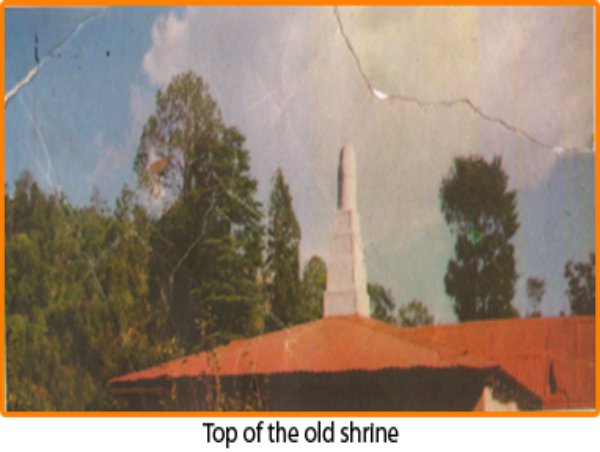
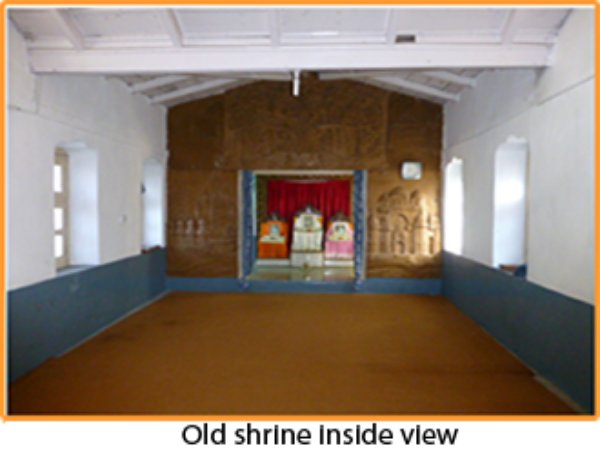
In June 1945, a new shrine was built behind the main building of the Ashrama, with an entrance inside the main building. Sri Ramakrishna, Sri Sarada Devi, and Swami Vivekananda are represented in this newly constructed shrine.
3. Virajananda Dham
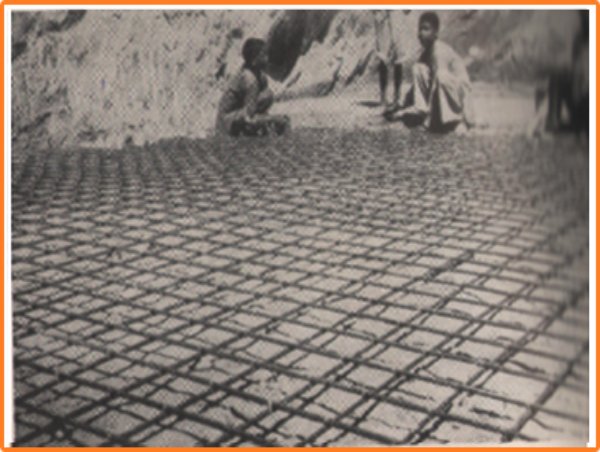
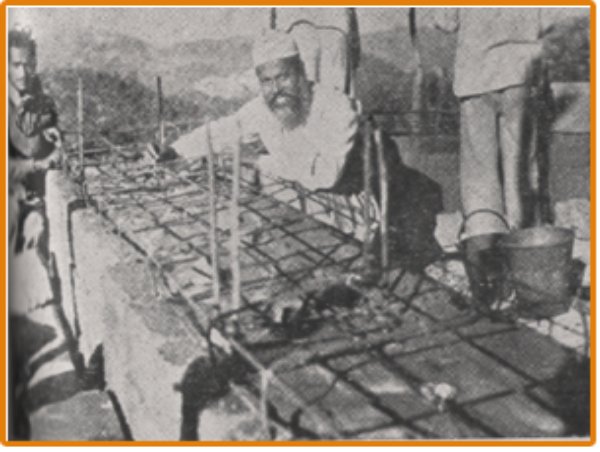
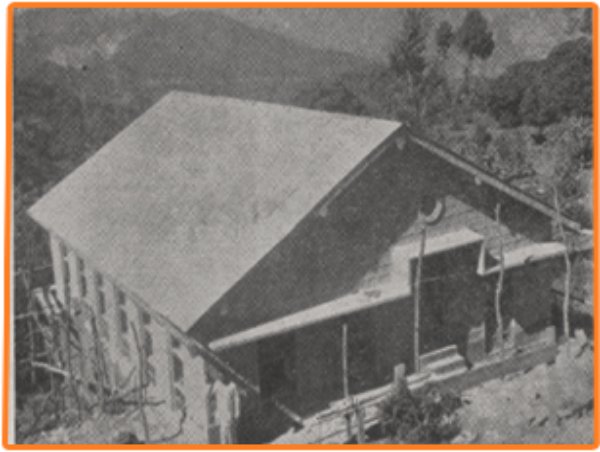
As mentioned earlier, Swami Virajananda purchased a bungalow in 1924. This building had three rooms on the ground floor. In 1940, a first floor was added, and from that time, whenever Swami Virajananda visited Shyamlatal, he stayed on the first floor. His last visit to Shyamlatal occurred in 1950, and he left on May 3, 1950.
4. Agriculture and Horticulture
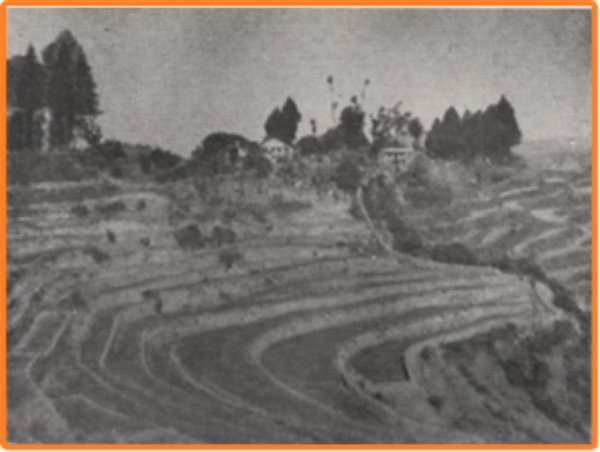
As mentioned earlier, Swami Virajananda purchased a bungalow in 1924. This building had three rooms on the ground floor. In 1940, a first floor was added, and from that time, whenever Swami Virajananda visited Shyamlatal, he stayed on the first floor. His last visit to Shyamlatal occurred in 1950, and he left on May 3, 1950.
5. Orchard and flower garden
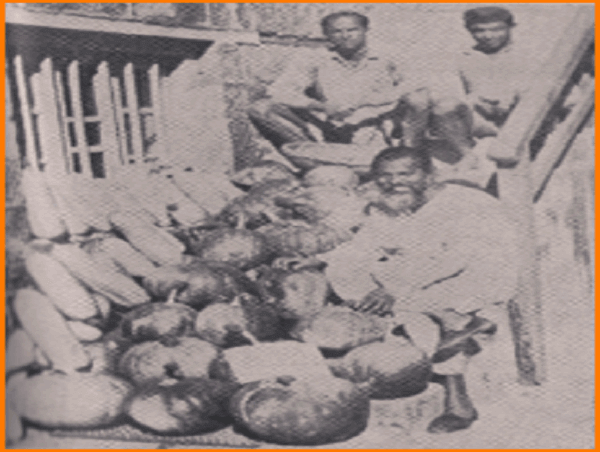
Swami Virajananda had a deep love for fruits and flowers, and gardening was his hobby. He planted many types of fruit trees, such as mango, walnut, apple, and pear, as well as flower plants like magnolia, karabi, and roses. These plants remind people of his cherished memory. Over time, the orchard expanded to include orange, litchi, guava, lemon, peach, and plum trees. This growth also gave local people a chance to learn about farming and find employment.
The flower garden became remarkable, featuring 250 varieties of dahlia, which is the highest number in any single place in India, along with nearly 100 varieties of gladioli, 250 varieties of roses, and many other flowers.
6. Apiary
The large variety of flowers in the garden allowed the Ashrama to set up a sizable apiary. This not only provided additional income but also helped with cross-pollination. As a result, there was improved production of agricultural products such as wheat, maize, paddy, and vegetables.
7. Dairy farm
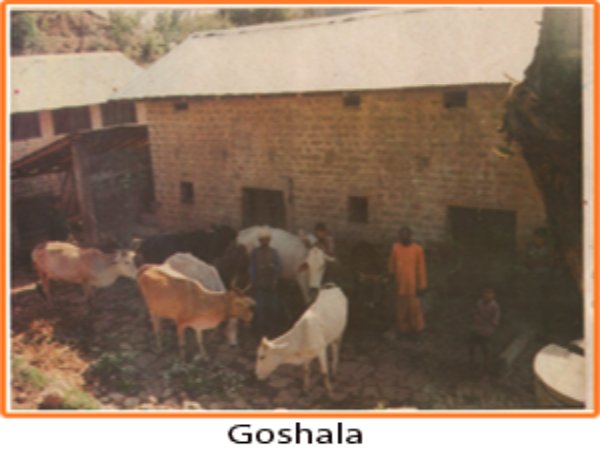
To train local people in keeping cattle clean and healthy, the Ashrama developed and maintained a dairy farm with several cows and a bull. This initiative also creates job opportunities for the community.
8. Library
The Ashrama developed and maintains a library that contains religious books, journals, and periodicals.
9. Primary School
The Ashrama worked hard to raise awareness about education among the villagers. It built a primary school building near the lake and hired a teacher to provide regular lessons.
10. Accommodation
To help devotees, supporters, and monks, the Ashrama expanded its living space.
11. Annual Celebrations
The Ashrama celebrates the birthdays of Sri Ramakrishna, the Holy Mother Sri Sarada Devi, Swami Vivekananda, and other important teachers. These events are held with respect. They include special worship, homa, chanting of scriptures, bhajan, and sankirtan. Devotees receive prasad, and the poor are fed. Ramanama Sankirtan takes place on every Ekadashi day.
12. New Shrine
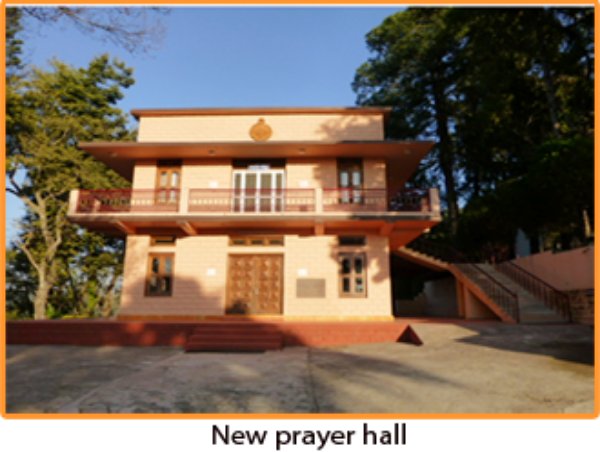
The old shrine was inside the main building of the monastery, which made it hard for the resident monks because of all the visitors. It was also small. So, a new building was built. The first floor has a big prayer hall, while the ground floor has a library, a place to buy books, and an exhibition about the lives of Shri Ramakrishna, Sri Sarada Devi, and Swami Vivekananda.
13. Integrated Child Development Program
To celebrate Swami Vivekananda’s 150th birthday, an Integrated Child Development Program was held from 2010 to 2014, supported by the Indian government. This program focused on physical, mental, moral, and intellectual training for children aged 5 to 12. The Ashrama is still funding this program with its own money today.
14. Water Reservoirs and Rainwater Harvesting
The Ashrama has built a 60,000-liter water reservoir with government help on a hill. This provides fresh drinking water to villagers within a 10 km area. Additionally, a 30,000-liter reservoir has been built at the Ashrama for patients and visitors. Three rainwater harvesting systems have also been set up to support farming needs.
15. Vegetable Cultivation in Poly Houses
Due to problems with monkeys, it’s hard to grow fruits and vegetables in open fields. Now, vegetables are grown inside polyhouses. The Ashrama received help from the Department of Science & Technology, DRDO, in New Delhi to set up these polyhouses and gave them to villagers, helping them become self-sufficient.
16. Guest House and Visitors
Shyamlatal Ashrama has become a spiritual retreat because of the deep practices of Swami Virajanandaji Maharaj. Many monks and devotees visit the ashrama to spend time meditating and practicing spirituality, finding inspiration during their stay. The history of Shyamlatal shows how work and meditation can go hand in hand, thanks to the dedication of the monks and the organized efforts of the mission.
Shyamlatal Ashrama in Recent Years
Despite many challenges, generations of monks have kept the spirit of the Ashrama alive. They focus on deep meditation and serving others. The dispensary has become a modern medical unit. It now has advanced diagnostic equipment. Patients can access X-rays, ECGs, blood tests, urine cultures, and dental care. Services include tooth extractions, scaling, cosmetic work, and root canal treatments.
Recently, a remote monitoring system was added. This allows patients to consult with expert doctors online from far away. The dispensary sees about 40 to 45 patients each day. All services are free; no money is charged. The Ashrama also provides a free vehicle service for patients. Twice a week, a vehicle picks up patients from the main road. After treatment, the same vehicle takes them back.
For patients needing elective surgeries, free operations are arranged at our Kankhal and Vrindavan hospitals. In the 90 km area from Champawat to Tanakpur, there has been no medical facility for 100 years. The situation has not changed. Vivekananda Ashrama has been the only source of medical help for local people for the past century. The Ashrama has provided this support consistently.